Bitcoin

Bitcoin: The Digital Gold Reshaping Global Finance

Introduction: A Revolutionary Currency in a Digital Age

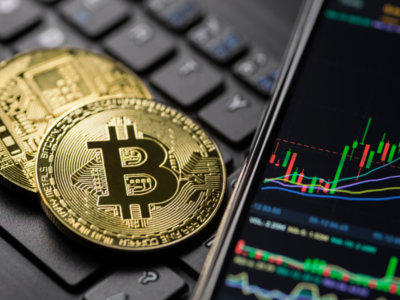
In a world increasingly driven by technology, Bitcoin has emerged as one of the most transformative innovations in financial history. It is more than just a digital currency—it is a paradigm shift. Born from the turmoil of the 2008 global financial crisis, Bitcoin was designed as a decentralized alternative to traditional banking systems, challenging long-standing institutions and reshaping the way we think about money, trust, and value.

Though once regarded as a fringe experiment favored by tech enthusiasts and libertarians, Bitcoin has evolved into a mainstream asset discussed in boardrooms, traded on major platforms, and held by institutional investors. But what truly sets Bitcoin apart from previous forms of money is not just its digital nature, but the philosophy it embodies—a belief in autonomy, transparency, and a financial system not governed by central authorities.

The Genesis of Bitcoin

Bitcoin was introduced to the world in 2009 by an anonymous figure or group known only as Satoshi Nakamoto. It was born from a white paper titled “Bitcoin: A Peer-to-Peer Electronic Cash System”, which outlined a radical idea: a currency that required no intermediary to facilitate transactions.

At its core, Bitcoin is built on blockchain technology—a decentralized, distributed ledger that records every transaction across a network of computers. This innovation solved the so-called “double-spending” problem that had plagued earlier digital currencies, ensuring that each Bitcoin could only be spent once without the need for a central authority.

The beauty of this design lies in its simplicity and integrity. Every Bitcoin transaction is verified by network participants called miners, who use complex algorithms to confirm the validity of each block. Once added to the blockchain, these transactions become immutable, effectively safeguarding the system against fraud and manipulation.

Bitcoin as a Store of Value: The New Digital Gold

While Bitcoin was initially intended as a medium of exchange, it has increasingly been embraced as a store of value—often dubbed “digital gold.” This comparison is not without merit.

Like gold, Bitcoin is finite. Its total supply is capped at 21 million coins, a feature hardcoded into its protocol. This scarcity gives it a deflationary quality, meaning its value is more likely to appreciate over time as demand increases and supply diminishes. Unlike fiat currencies, which central banks can print at will, Bitcoin’s issuance follows a predictable schedule, immune to political interference.

Moreover, Bitcoin is easily divisible, portable, and resistant to censorship, making it arguably more versatile than its physical counterpart. In countries experiencing economic instability or rampant inflation, Bitcoin offers a refuge—a way to preserve wealth outside the control of faltering institutions.

The Rise of Institutional Adoption

Over the past decade, Bitcoin has gradually shed its outsider image. What was once seen as a speculative plaything for early adopters is now being embraced by some of the world’s largest financial players.

Major investment firms such as BlackRock, Fidelity, and ARK Invest have incorporated Bitcoin into their portfolios. Publicly traded companies like MicroStrategy and Tesla have added Bitcoin to their balance sheets. Even sovereign nations like El Salvador have adopted Bitcoin as legal tender—a bold move that underscores the currency’s growing legitimacy on the global stage.

This wave of institutional adoption has lent Bitcoin a new level of credibility. It is now recognized not just as a technological curiosity, but as a legitimate financial instrument with the potential to serve as both a hedge against inflation and a long-term investment asset.

Challenges and Criticisms

Despite its promise, Bitcoin is not without challenges. Its price volatility remains a concern, particularly for those who view it as a reliable store of value. While early investors have seen massive gains, the currency has also experienced sharp corrections, leading some to question its stability.

Energy consumption is another controversial aspect. The process of mining Bitcoin requires vast amounts of computational power, which in turn consumes significant electricity. Critics argue that this environmental cost undermines its value proposition. However, proponents point out that a growing percentage of Bitcoin mining now uses renewable energy sources, and that the industry is evolving to become more sustainable.

Regulatory uncertainty also looms large. Governments around the world are grappling with how to classify and regulate Bitcoin—whether as a commodity, a currency, or something else entirely. Striking a balance between innovation and oversight will be crucial for its continued growth.

The Broader Implications for Financial Sovereignty

One of the most profound aspects of Bitcoin is its potential to democratize finance. In traditional systems, access to banking services is often limited by geography, bureaucracy, or institutional barriers. Bitcoin, by contrast, is borderless and inclusive. Anyone with a smartphone and an internet connection can participate in the network, send or receive funds, and store wealth without the need for a bank account.

This opens up enormous possibilities for the unbanked and underbanked populations of the world—nearly two billion people according to the World Bank. For these individuals, Bitcoin is not just a novel asset; it is a lifeline to the global economy.

Looking Ahead: Bitcoin’s Evolving Role

As the world becomes increasingly digitized, Bitcoin’s relevance is likely to grow. Its decentralized nature aligns with broader cultural trends toward transparency, individual empowerment, and skepticism of centralized power. Whether it ultimately becomes a dominant global currency, a niche asset, or something in between, its influence on finance, technology, and policy is already undeniable.

Future developments in the space—such as the implementation of the Lightning Network for faster transactions, or integration with other financial technologies—will determine how Bitcoin continues to evolve. But one thing is certain: Bitcoin has started a conversation about money that cannot be unspoken.

Conclusion: More Than a Currency

Bitcoin is not merely a financial asset or a speculative tool—it is a cultural phenomenon and a technological breakthrough. It represents a shift in the way humanity thinks about value, ownership, and trust.

As with any disruptive force, it brings both opportunities and challenges. Yet, whether embraced or resisted, Bitcoin has irrevocably changed the financial landscape. In doing so, it has earned its place not just in portfolios, but in the pages of history.

In an age of digitization and decentralization, Bitcoin stands not only as a currency of the future, but as a symbol of financial freedom today.

What is your reaction?

Excited
0
Happy
0
In Love
0
Not Sure
0
Silly
0

You may also like

More in:Bitcoin